 eTopical Precious Finds
Mortgage lending costs are often associated with interest rates, but applications that never reach completion can lead to the most financial burden for borrowers and lenders. Applications that fail to close usually consume time and operational resources without generating results. In many cases, problems arise because borrowers’ and lenders’ expectations are not aligned early enough in terms of eligibility, costs, and affordability.
Rather than simplifying the credit lending application process by reducing financial information, greater efficiency may come from improving processes earlier in the borrower journey. Preliminary credit evaluations can help give everyone an idea of how applicants are possibly financially positioned to move forward before even submitting a full application.
Clear communication is also important. Providing transparent cost expectations earlier in the process can reduce misunderstandings and a better understanding of how much money is needed for a loan between everyone involved, lowering the chances of applications falling through later on in the process.
Nonetheless, maintaining comprehensive credit evaluations is the most important aspect of getting the best loan decision. Incomplete data can introduce uncertainty into risk assessments, making it harder to accurately match borrowers with the most suitable loan terms.
Ultimately, improving mortgage efficiency depends strongly on building smooth processes that reduce wasted effort early on while preserving confidence in the information used to make the right lending decisions.
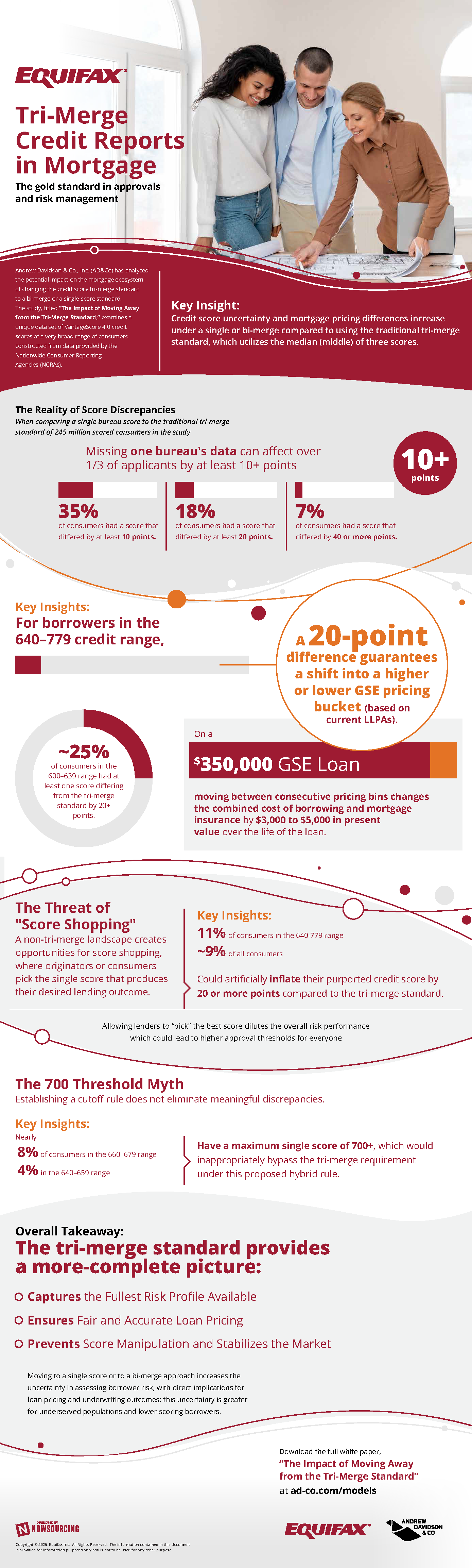
Source: Equifax